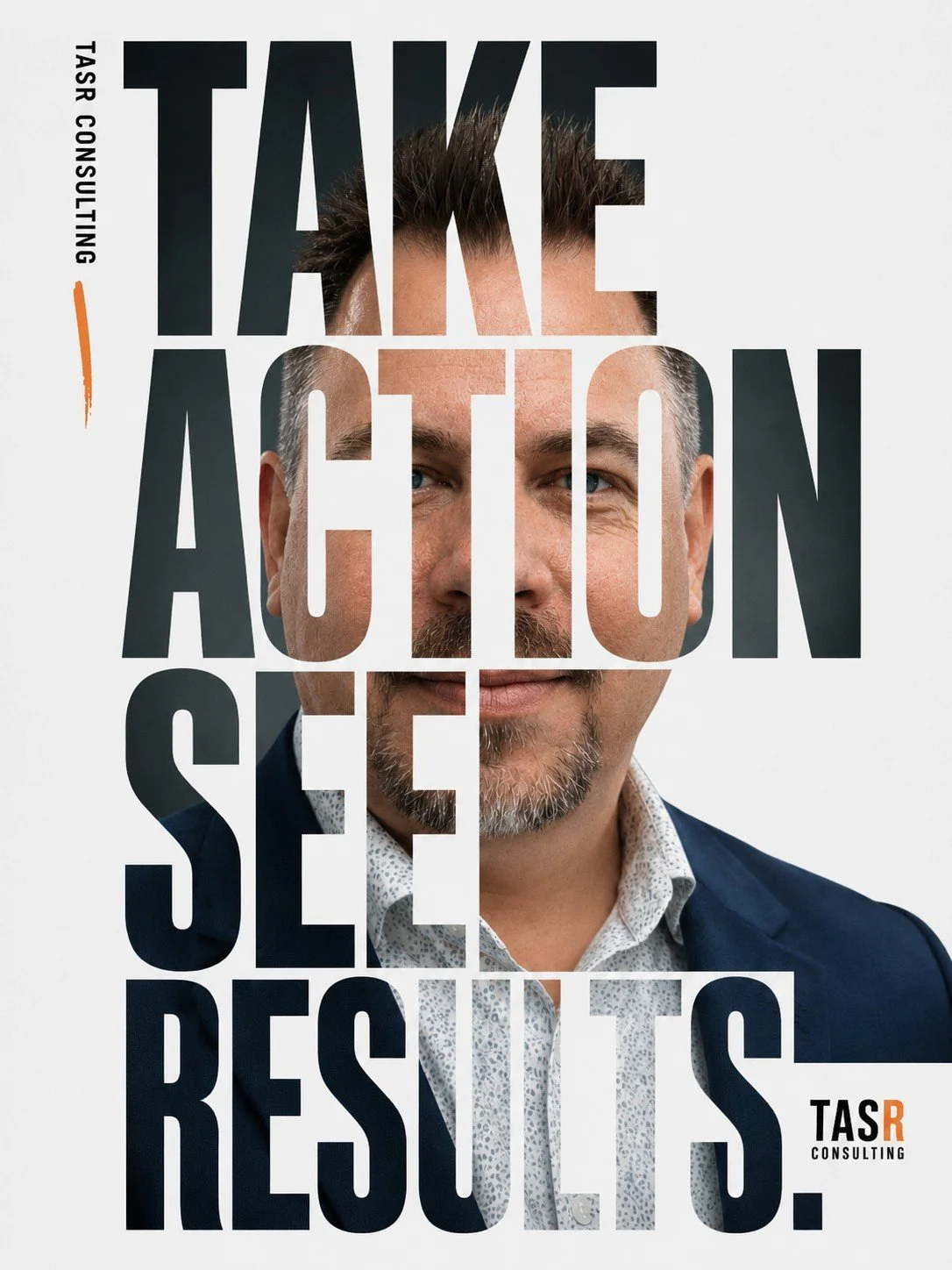
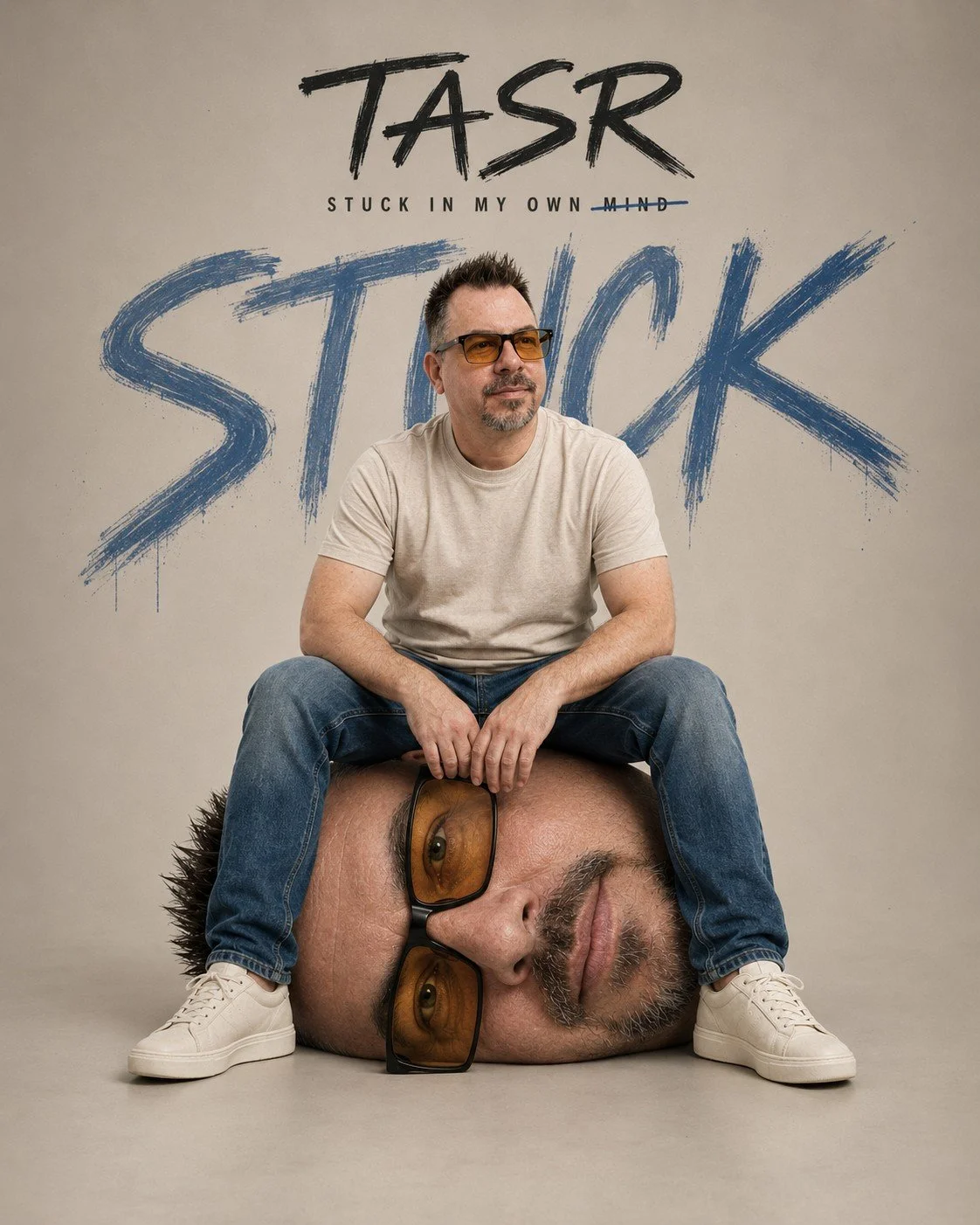
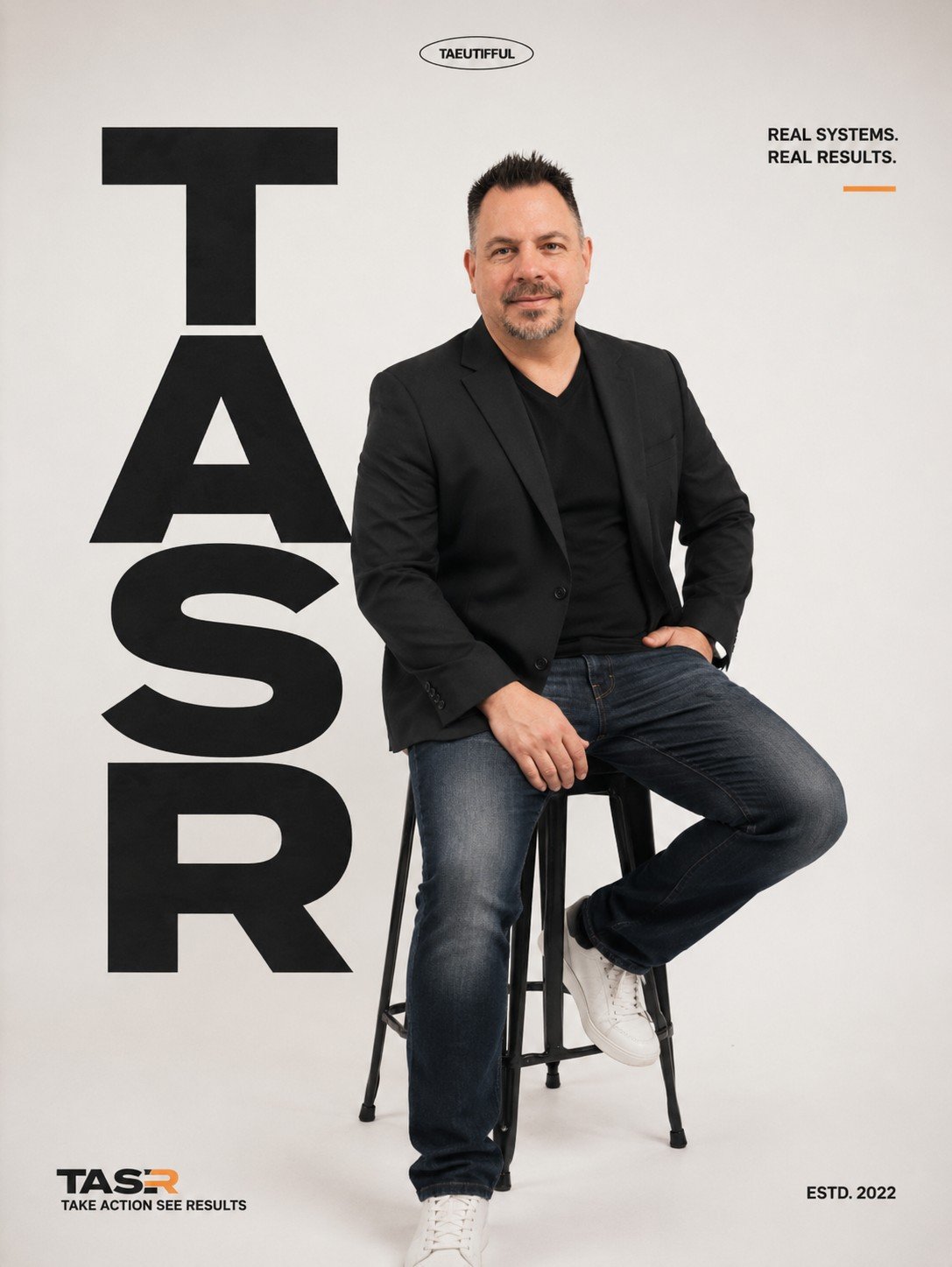
ChristopherWells.
The guy who almost lost everything because he built his entire identity around a job that didn’t have his back.
Professional half-body or full shot
Confident posture • Direct eye contact
Replace .hero-photo-placeholder div with <img>
This Isn’t a Highlight Reel
Most About pages read like a LinkedIn profile had a baby with a motivational poster. This one won’t.
I’m not going to tell you I’ve got it all figured out. I’m going to tell you the truth: I spent over two decades grinding in one of the highest-pressure industries in the country, and at my lowest point, I couldn’t get out of bed for a week.
TASR Consulting didn’t come from a business plan. It came from a breakdown. And if you’re here, there’s a good chance something in your life isn’t working either.
Good. That means you’re in the right place.
Where It Started
I’m 49 years old. I grew up in Maywood, a small town in North Jersey, and went to Hackensack High School. I was a C student. Not because I couldn’t do the work—when I cared, I could pull A’s and B’s without breaking a sweat. The problem was I almost never cared. I had ADHD before anyone was diagnosing it, procrastination that bordered on self-sabotage, and a low-grade imposter syndrome that whispered I didn’t belong in any room I walked into. School was something I survived, not something I learned from.
Soccer was the only place I came alive. I played varsity all four years of high school and on a club team called the Tornados out of Ramapo. On the field I was a different person—disciplined, locked in, willing to outwork anyone. Off the field, none of that transferred. I didn’t know yet that the skills I was building in cleats were exactly the skills I was failing to use everywhere else.
Why I Failed Out of College
I went to Rider University and lasted two years before I failed out.
That sentence used to embarrass me. Now I lead with it.
It wasn’t a lack of intelligence. It was every single thing I’d been dodging my whole life finally catching up with me at once. I was more interested in socializing, partying, and girls than in showing up to class. The procrastination went from inconvenient to catastrophic. The ADHD was running the controls. And nobody around me was teaching me how to manage any of it.
Here’s the part I want you to hear if you’re a parent reading this, or if you’re a man in your 30s or 40s still beating yourself up over choices you made at 19: I didn’t fail college. The system I was using to live my life failed me. I didn’t have systems. I had vibes. I had whatever felt good in the moment. And the moment ran out of road.
After Rider, I enrolled at a tech school and learned BASIC, COBOL, Visual Basic, C++, and Java. The languages were fine. But pretty quickly I figured out that sitting in a chair writing code wasn’t my thing. What I actually loved was the hardware. The networks. The hands-on building. I took a job in North Jersey doing exactly that—building computers, installing networks, troubleshooting systems across the state. For the first time in my life, I was good at something professionally because I wanted to be, not because I had to be.
The Hour-Long Drive That Changed Everything
A friend of mine named Jason Polukord set me up on a blind date with a woman named Kathy. She lived an hour away. I drove it anyway, because something told me to. I was right.
After enough commutes to know I was wasting gas, I moved to Bordentown to be closer to her. Problem was, my IT job was now too far away and I couldn’t find a comparable role nearby. I needed something. I saw an ad from a Ford dealership offering a $1,000 bonus to anyone who lasted six months in sales.
I took the leap to chase a $1,000 check. That decision became the next twenty years of my career.
The first time at Haldeman Ford, I did what I’d always done—the minimum to not get fired. I leaned on Kathy for stability while I figured out who I was supposed to be. I wasn’t proud of it. I wasn’t building anything. I was coasting, the same way I’d coasted through high school and into a college failure. The pattern didn’t care that the setting had changed.
The Turning Point Had a Name
In 2004, Kathy decided to buy her first new car. We went to Honda of Princeton. The dealership made an impression on me. More importantly, they made an impression on her. She bought the car, and on the way out, someone at the store mentioned they were building out their Business Development Center and asked if I’d be interested. I joined the BDC and finally landed somewhere that would matter.
Old habits don’t die because you change buildings. The first few months at Honda looked exactly like every other job I’d ever had—just enough effort to keep my badge. But two things hit me in the same year that finally cracked the pattern.
First, Kathy and I got married. Mortgage. Bills. Real responsibilities with both our names on them. I couldn’t coast on someone else’s back anymore. The math wouldn’t let me.
Second, a man named Pete Rubino—the used car manager—saw something in me that I hadn’t seen yet. He pulled me into used cars as his assistant manager and started teaching me how the business actually worked. How to appraise a car. How to manage inventory. How to close a deal. How to think like a professional instead of a guy clocking in. Pete is the reason I have a career. I will say that out loud for the rest of my life.
Then in 2006, my daughter was born. And whatever switch hadn’t flipped yet—flipped.
I wasn’t coasting anymore. I wasn’t doing the minimum. I had a person on this planet who needed me to be excellent, and I decided that’s what I would be.
I looked at the top salesperson at the dealership, a guy named Brian Watkinson, and decided I was going to study him. I watched what he did, how he talked to customers, how he managed his day. I took notes. I changed my process. I worked harder than I’d ever worked at anything. And eventually I beat him. I sold 35 cars in a single month. The kid who used to coast became the guy at the top of the board.
From there it moved fast. Sales Manager. Finance Manager. And in 2018, Director of Finance.
Somewhere along the way, a man named Tony Parsialle asked me a question I’ve never forgotten:
“When you go home at night and see your family, can you say you gave your best today?”
For most of my life, the honest answer was no. Now I work every day to make sure the answer is yes.
And I still get reminded there’s another level. There’s a salesperson I work with named Zach—disciplined, focused, locked in. Watching him work keeps me humble. The day you think you’ve mastered this is the day you stop growing.
That’s the climb. From a kid who couldn’t sit still in a classroom, to a man who couldn’t sit still long enough to fix what was breaking inside him. The wins were real. So was the cost.
What Nobody Tells You About Being the Guy Who Never Stops
I built my entire identity around work. I didn’t just have a strong work ethic—my work ethic was my life. It wasn’t about balance. It wasn’t about personal time. This profession doesn’t hand out personal time. It was about providing for my family, and I believed the only way to do that was to outwork everyone, every single day.
The problem is, when your identity is your job, losing that job doesn’t just mean losing a paycheck. It means losing yourself.
The first time I was let go from Honda, I went to a dark place. Real dark. This was my home. This was where my identity lived. I had poured everything into building that dealership and making it what it was. And just like that, it was gone.
I learned what depression, anxiety, and stress actually feel like. Not the words people throw around casually. The real thing. Chest pains so severe I thought something was physically wrong with me. Pressure on my chest like an elephant standing on it. Anxiety attacks so bad I couldn’t drive long distances without triggering one.
Let me tell you what a mental breakdown actually feels like, because most people have no frame of reference until they’re in it. And by then, it’s too late to prepare.
It starts in your body before it ever reaches your brain. You wake up exhausted—not the kind of tired where you stayed up too late, but the kind where eight hours of sleep did absolutely nothing. Your body feels like it’s made of concrete. Your chest is tight, like someone parked a car on it. You’re not having a heart attack. You’re not dying. But your body doesn’t know that. It’s stuck in fight-or-flight mode with nowhere to run and nothing to fight. Your muscles are clenched, your breathing is shallow, and there’s a weight pressing down on you that no one else can see.
Then you close your eyes at night. And that’s when the real war begins.
Your brain starts replaying what happened. The thing that put you here. Maybe you lost your job. Maybe your marriage fell apart. Maybe someone you loved died. And your mind starts running through every single decision you could have made differently. What could I have said? What should I have done? How could I have changed the outcome?
You run those thoughts through your head for hours. Not minutes. Hours.
You know how you get a song stuck in your head? That one track that just keeps looping—over and over and over again—and no matter what you do, you can’t make it stop? Now take the worst thing you can possibly imagine and put that on repeat. Not for an afternoon. For days. For weeks. That is what psychologists call rumination—a repetitive negative thought process that loops continuously in the mind without end or completion. Your brain is not problem-solving. It feels like it is. It feels like if you just think about it one more time, you’ll find the answer, you’ll crack the code, you’ll figure out what you should have done. But that’s the lie. There is no answer at the bottom of that loop. There’s just another lap.
And here’s the part that makes it dangerous: this creates a feedback loop. The rumination feeds the depression. The depression deepens the isolation. The isolation gives you more time alone with your thoughts. And the thoughts get louder. Research has shown that rumination both increases the risk of developing depressive symptoms and is caused by those same symptoms. It’s not a downward spiral. It’s a drain—and you are circling it.
This is the internal mental drain on a person that you cannot see from the outside.
From the outside, you might look fine. You go to work. You answer emails. You say “I’m good” when someone asks how you’re doing. You smile when it’s expected. But inside, everything is muted. You’re running on autopilot—showing up, going through the motions, while the real you is trapped in a room in your head replaying the same scene for the thousandth time. Nobody watches you do it. Nobody knows you’re doing it. You are fighting a war that is completely invisible.
And the physical toll is real. People don’t talk about this enough. Depression isn’t just sadness. It rewires how your body works. The systems in your brain responsible for motivation, focus, and decision-making start to malfunction. Things that used to be automatic—getting dressed, making coffee, answering the phone—now require enormous effort. Not because you’re lazy. Because your operating system is compromised.
You can’t do the small things in life.
Your kid asks what’s for dinner and you stare at the wall. Your phone has 47 unread messages and you can’t bring yourself to open a single one. There’s a bill on the counter you’ve looked at six times without touching. The trash needs to go out. The laundry is piling up. You know what needs to happen, but the distance between knowing and doing feels like a canyon you can’t cross.
That’s the difference between understanding this intellectually and having lived it. When you’ve lived it, you know that the hardest part of your day wasn’t some big challenge or crisis. It was getting out of bed. It was brushing your teeth. It was pretending to be a functioning human being for the people who depend on you.
This is not a bad week. This is not something you snap out of. This is a nightmare you live inside of every single day while the rest of the world keeps moving without you. And the longer it goes on, the more you start to believe this is just who you are now.
But here’s the thing—and this is important.
This was the moment. Right here, in the middle of all of it, was the first time I started thinking: I need to get unstuck. This isn’t normal. No one can live like this forever. Something has to change, and it needs to change now.
Not tomorrow. Not next month. Now.
That thought—that one single moment of clarity cutting through the noise—was the beginning of everything that came after it. It didn’t fix anything overnight. But it cracked the door open. And sometimes, that crack is all you need.
I got help. My wife Kathy stood beside me. I found a therapist. I started talking through it and learning how to quiet the noise. It didn’t happen overnight, but it happened.
Then I Went Back
After leaving Honda, I worked briefly at Princeton BMW and a Jeep Dodge Chrysler dealership. But Honda was my home—or so I believed. The GM called me back. He always did. The money was the driver, and my family needed it. So I returned.
For the first few months, things seemed fine. I think I lied to myself about how great the place was. Then the cracks started showing again. Small panic attacks. Then every morning on the way to work, the closer I got to the office, the worse it became. Meetings with other managers left me unable to breathe. My body was shutting down from the inside, recognizing what I was refusing to see with my own eyes.
In early 2025, I was let go again. A customer issue with one of my finance managers—a customer I had never even worked with. But I was the director, and someone had to go.
My body shut down completely. I didn’t get out of bed for a week. I couldn’t sleep. My mind would not stop. How? Why? What? I had let my guard down again and put all my faith in something that didn’t have my back. Again.
If you’re going through something like this right now, please reach out for help. You can contact the 988 Suicide & Crisis Lifeline by calling or texting 988, available 24/7. You don’t have to do this alone.
Four Things Got Me Out
My Wife
Kathy sat down with me and we built a plan to move forward. She didn’t try to fix me. She stood next to me while I fixed myself. If you have someone like that in your life, don’t take them for granted.
Professional Help
I called a therapist immediately. Talking it out, building strategies to manage the anxiety, learning to quiet the mind—these are not signs of weakness. They’re the tools that kept me alive.
Writing
During the downtime between dealerships, I discovered that putting words on paper got them out of my head. Some nights I sat and wrote for hours before bed just to clear my mind. I had written before, but this was different. This was survival. And it became the foundation for everything TASR would become.
Giving Up Alcohol
This was the single best decision I have ever made. Not the easiest. Not the most popular. But the best. I had to stop numbing the pain and start facing it. What I found on the other side was a version of myself I forgot existed.
The Bottle You Think Is Helping You Is Burying You
This part isn’t easy to write. But if you’re reading this, you didn’t come here because you wanted easy. You came here because something isn’t working.
If you’re using alcohol to get through your days—a few drinks after work to take the edge off, a bottle of wine to quiet the noise in your head, a couple of bourbons to numb the weight of everything you’re carrying—you are not coping. You are self-medicating. And there is a difference.
Self-medicating means you are using a substance to manage pain that you haven’t dealt with. You’re not drinking because you enjoy it. You’re drinking because you can’t sit with how you feel without it. Research shows that nearly one in four people with mood disorders use alcohol or drugs to relieve their symptoms. And men are more than twice as likely as women to do it. That’s not a coincidence. That’s a pattern. Men are conditioned to push through, to tough it out, to handle it. And when they can’t handle it, they don’t talk about it. They pour something over it.
I know this because I lived it.
I am not proud to say that I was a binge drinker. I loved bourbon. I didn’t just drink it—I collected it. I turned my worst trait into a hobby. At my lowest point, my collection was worth over $20,000. Rows and rows of bottles. Impressive to look at. Impressive to talk about. And absolutely destroying me from the inside out.
Here’s what the cycle looked like—and if this sounds familiar, pay attention, because this is the part most people never say out loud.
I’d wake up with a headache. Sick to my stomach. Dragging through the morning like I was moving underwater. By lunch, I’d start to feel human again. I’d get through the afternoon. Then I’d go home that night and pour two more glasses to numb the day so I could move on to the next one. And then I’d do it all over again.
Day in. Day out. Until it became normal.
That’s the trap. It doesn’t feel like a problem because it feels like routine. You’re not blacking out in a ditch somewhere. You’re not missing work. You’re functioning—technically. But you are not growing. You are not moving forward. You are simply existing until the next day. And the worst part? You are so numb that you don’t even enjoy the things right in front of you. Your kids. Your life. Your love. It’s all there, and you can’t feel any of it.
Alcohol is a depressant. It slows down your central nervous system. When you drink, it temporarily boosts dopamine and serotonin—the chemicals that make you feel good. That’s the initial relief. That’s the exhale. But as the alcohol wears off, those chemicals crash hard. Your brain is left running on fumes. The anxiety comes back louder. The sadness hits deeper. The feelings you were trying to escape are now worse than they were before you picked up the glass. And over time, the more your brain relies on alcohol to produce those feel-good chemicals, the less it produces them on its own. You’re not just numbing the pain anymore. You are chemically training your brain to need alcohol to feel anything at all.
Two years ago, I decided I was done.
I won’t kid you. It’s one of the hardest things I’ve ever done, and not for the reasons you think. The physical part passes. Within the first week, your sleep starts improving. Alcohol wrecks your REM cycle—the deep, restorative sleep your brain needs to function. Once you stop drinking, real sleep comes back. Within two weeks, your blood pressure starts dropping. Your mood stabilizes. Your energy increases. Within a month, your liver starts repairing itself, your thinking clears up, and you start losing weight.
I lost weight. I had more energy than I’d had in years. I was able to accomplish more in a single day than I used to get done in a week. I was present—actually present—for the people who matter. Not going through the motions. Not faking it. There.
But here’s the part nobody tells you: you have to change your lifestyle when you quit. The people you were always drinking with will not like that you’re not taking part. You become the weird one. The guy who orders water at the bar. The one who leaves early. You’ll notice that the social settings you used to enjoy aren’t fun anymore—because they were never fun. The alcohol was fun. The setting was just where you happened to be standing when you drank it.
At this point, I never get the urge to drink. That part faded faster than I expected. But I’ll be honest—I miss the social aspect. I miss being a little more open, a little more loose, a little more engaging around people. Alcohol did that for me. It lowered the wall. And without it, I’ve had to learn how to lower that wall myself, which is a different kind of work entirely. It’s harder. But it’s real. And real is what I was after.
If you’re reading this and something in your gut just tightened—if any of what I described sounds like your Tuesday night—I’m not here to judge you. I was you. I’m here to tell you what’s on the other side. And what’s on the other side is a version of yourself that you forgot existed. A version that wakes up clear. That has energy for his kids. That can sit in a quiet room without needing to pour something to survive it.
You don’t have to announce it. You don’t have to make it a thing. You just have to decide. And then you have to not pick up the glass.
That’s it. That’s the whole play. And it might be the best thing you ever do.
I also didn’t have long to sit around. Within days of leaving Honda, I received a phone call from someone I had worked with years before. Then another call. Then another. Within a few days, seven different dealerships had reached out to hire me. Twenty-plus years of showing up, being first in and last out, being constantly consistent—the industry knew who I was.
I took the position at Volvo of Princeton as Finance Director, running Polestar Princeton, Polestar Philadelphia, and Volvo of Princeton. The hours were better. The ownership was family-run and valued family. The people there worked as a team—they helped each other instead of tearing each other down. No mind games. No toxic politics. Just people doing the work.
And that’s when I realized something that changed everything.
The place I kept going back to wasn’t home. It was the opposite. It was a deeply negative environment that I had become so accustomed to that I couldn’t see how bad it actually was. It was my normal. I had settled for what I knew and convinced myself it was the best I could get.
I know there are men out there living the same way right now. Showing up every day to something that’s slowly destroying them. Self-medicating with alcohol, weed, or prescriptions just to keep going. If that’s you, I need you to hear this: that life cannot be long-term. Your body or your mind will give out long before its time.
Why TASR Exists
TASR Consulting launched in 2025, during the space between my lowest point and my next chapter. It didn’t start as a business. It started as therapy. Writing was the only thing that quieted my brain at 2 AM when nothing else worked.
As I wrote, patterns emerged. The career obsession. The identity crisis. The toxic loyalty to environments that didn’t deserve it. The anxiety. The isolation. The refusal to ask for help. I realized I wasn’t writing about abstract self-improvement theory. I was writing about my life. And I was writing for every man who’d been through something similar and didn’t have anyone telling him the truth about it.
TASR stands for Take Action. See Results. Not because results come easy. But because nothing changes until you move. I didn’t read my way out of a breakdown. I didn’t meditate my way through a panic attack on the highway. I took action. Messy, imperfect, sometimes desperate action. And it worked.
The brand is built on five life pillars—because when a man is stuck, it’s rarely just one thing. The job bleeds into the marriage. The finances feed the anxiety. The health declines because everything else is on fire. You can’t fix one pillar while ignoring the other four.
Who I Built This For
TASR is for men between 35 and 55 who are dealing with depression, anxiety, self-doubt, or imposter syndrome. Men who built something that looks solid on the outside but feels like it’s falling apart on the inside. Men who have been the provider, the dependable one, the guy who never stops—and who are running on empty because of it.
You might be stuck in a job that’s killing you slowly but you don’t know what else is out there. You might have a marriage that’s drifting because you gave all your energy to work and had nothing left for home. You might be numbing yourself to get through the week and calling it normal.
I’m not a licensed therapist. I’m not a clinical psychologist. I’m a man who went through it, got help, and came out the other side with a framework that works. Everything I teach at TASR comes from two decades of real experience sitting across from more than 10,000 people, leading teams under extreme pressure, failing publicly, rebuilding privately, and learning what actually moves the needle when your life feels stuck.
If you’re looking for someone who will sugarcoat things, I’m not your guy. If you’re looking for someone who’s actually been in the hole and can show you how to climb out—keep reading.
The Full Career
Books by Christopher Wells
THE RESET
A 42-day self-improvement system built around seven phases: Foundation, Discipline, Wealth, Connection, Clarity, Freedom, and Integration. For men who need a structured path forward.
THE WEIGHT
A Survival Guide for Men Who Carry Everything. For the men who hold it all together for everyone else and have nothing left for themselves.
F*ck the Script
A car dealership sales training book built from 20+ years on the showroom floor. No theory. All real.
Financial Freedom for the Rest of Us
Practical wealth-building and debt negotiation for people who weren’t born into money.
Unplugged Presence
A guide to reclaiming your attention and focus in a world designed to steal both.
Embracing Uncertainty
How to move forward when you don’t have all the answers.
And more to come…
Ready to Stop Being Stuck?
THE RESET is a 42-day system designed to help you rebuild your life across all five pillars. No fluff. No theory. Just the framework I wish I had when I was at my lowest.
Start the ResetOutside the Work
I’m 49 years old, raised in Maywood, NJ, and now living in the Princeton area with Kathy and our three kids. My daughter is in college, and my two sons are growing up way too fast. When I’m not writing or running finance departments, you’ll probably find me on a soccer field coaching my kids’ teams. The sport I grew up playing has become the sport I get to teach. Coaching is one of the most gratifying things you will ever do if you have the opportunity.
When I first brought up TASR to Kathy, she didn’t hesitate. She said, “Go for it. I believe in you. I always got your back.” That kind of support doesn’t just help you build a business. It helps you rebuild yourself.
Everything I talk about at TASR—the discipline, the mental health work, the five pillars—this is something I work on every single day. It’s not a lesson I teach from a distance. It’s how I live. It is my number one priority now, and I wish I had learned it years ago. But I didn’t, and that’s the point. You don’t need to have figured it out early. You just need to start.
I’m not a guru. I’m a husband, a father, and a man who went through the worst stretch of his life and decided to build something useful out of it. That’s TASR.
Want to connect or work together? You can reach me directly here, or find me on LinkedIn below.
Connect on LinkedIn